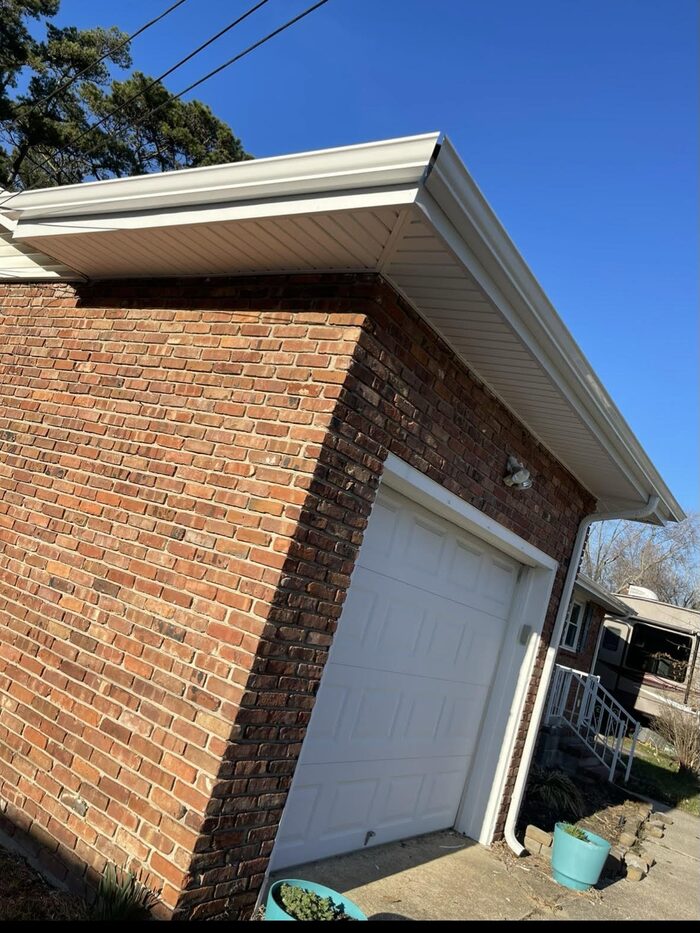
- Winter damage hides from the ground: ice pulls hangers loose, seams open, and pitch shifts without anything looking wrong.
- The 8-point check covers debris, downspouts, hangers, seams, pitch, fascia, drip edge, and discharge, in that order.
- Do it before storm season starts; spring is when a small winter problem turns into interior water damage.
Why Spring Cleaning Matters More Than Fall Cleaning
Most homeowners think of gutter cleaning as a fall activity. Get the leaves out before winter, done. The problem with that mental model is that it ignores everything that happens between December and April.
By the time spring hits in NJ, your gutters have absorbed:
- Late-fall debris from leaves that dropped after your last cleaning
- Ice damage from freeze-thaw cycles that loosened hangers and split seams
- Pine needles, pine cones, and small twigs blown in by winter wind
- Roof grit and granules washed down from shingle weathering
- Tree pollen and bud casings from spring trees coming back online
- Bird debris from animals that nested in eaves over winter
Hit your gutters with a real spring cleaning and inspection now, and they're ready for the heavy thunderstorms that start in May. Skip it, and the first big rain of the season is doing damage to fascia, foundation, and siding while the storm is still active.
The 8-Point Spring Checklist
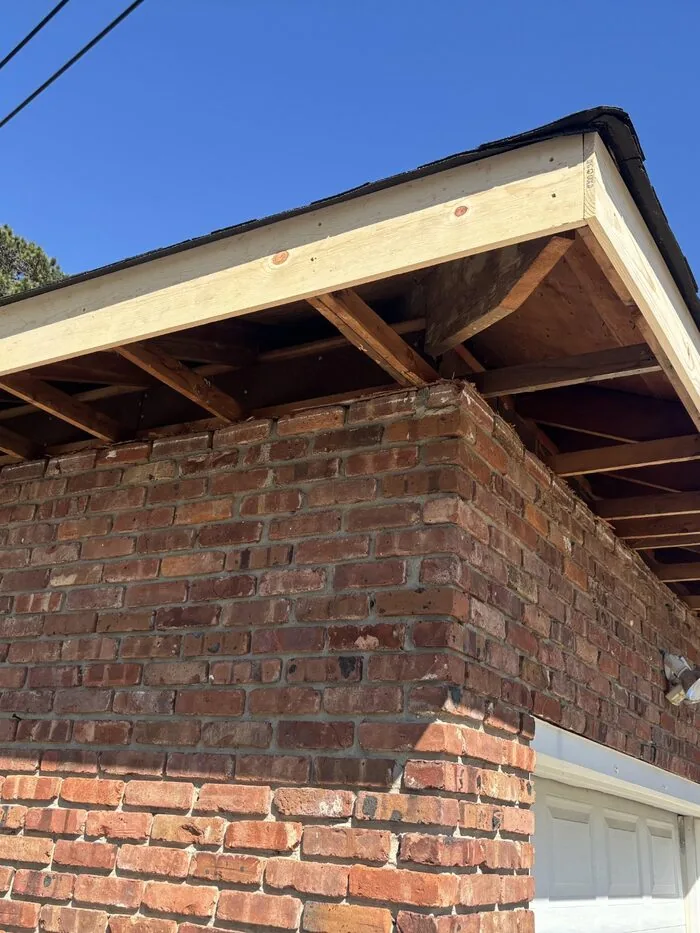
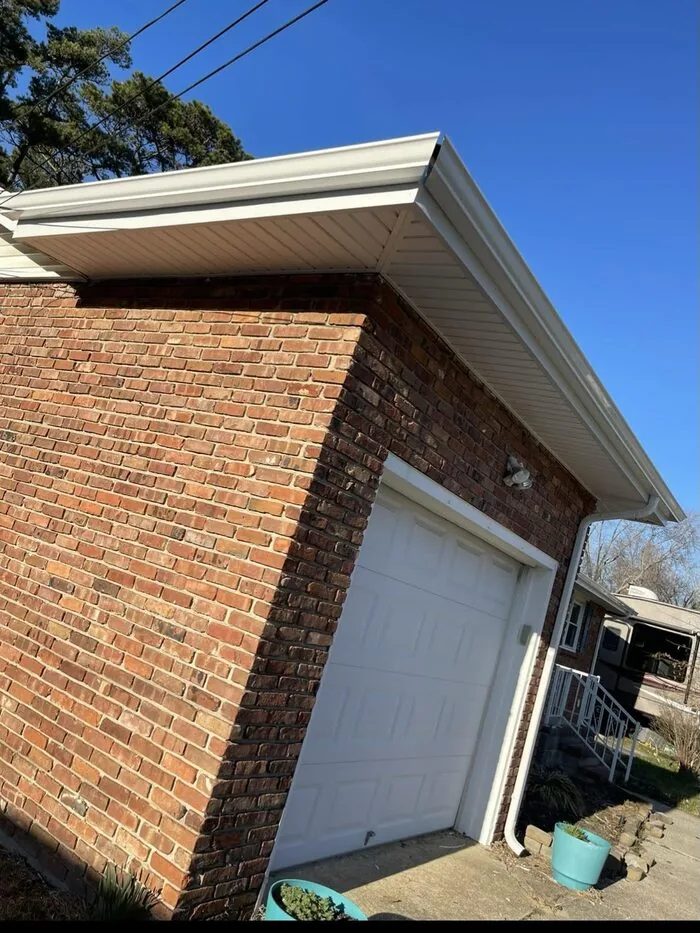
1. Clear All Debris from Every Run
This is the basic step but it's the foundation. Every section of gutter needs to be physically cleaned out, no half-done corners, no "looks fine from up here." Wet debris from winter is heavier and stickier than dry fall leaves. It compacts into the bottom of the gutter and forms blockages that are easy to miss from above.
If you're DIY-ing this with a ladder, work in 6-foot sections, dig down to the metal of the gutter floor, and don't trust the visible top layer to tell you what's underneath.
2. Flush Every Downspout
The single most important step that DIY homeowners skip. Run a hose into the top of every downspout for 60 seconds and watch where the water comes out. If the water hits the ground at the base in a steady stream, good. If it backs up into the gutter or trickles out, there's a clog somewhere in the downspout itself. We've pulled tennis balls, kids' toys, dead squirrels, and one time a brick out of downspouts that "looked fine."
3. Inspect Hangers and Brackets
Walk every run looking up at the gutter from below. The hangers and brackets that secure the gutter to the fascia take a beating from ice loading, snow weight, and wind. Look for:
- Visible sag between hangers (gutter dipping in the middle of a span)
- Missing or pulled-out screws
- Hangers that have rotated, leaving gutters unsupported
- Gaps where gutter has pulled away from the fascia
Re-screw or replace any failing hardware now. A loose gutter in May becomes a fallen-off gutter in July.
4. Check Seams and Corners for Leaks
Run that hose again, this time watching the seams and corner joints from below while water flows through. Any drip at a seam is a leak, winter freeze-thaw cycles open seams that were tight last fall. Most can be re-sealed with a quality gutter sealant. Some can't, and those sections need replacement.
The leak you ignore in May becomes the foundation moisture problem you're paying $8,000 to fix three years from now.

5. Inspect the Fascia Behind the Gutter
Pull a ladder up and look at the fascia board where the gutter is mounted. You're looking for:
- Soft or spongy wood (press gently with a screwdriver, it shouldn't dent easily)
- Visible rot, mold, or moss growth
- Paint that's bubbling, peeling, or has a watermark line
- Daylight visible behind the gutter where it shouldn't be
Fascia rot is the silent killer of gutter systems. The gutter is fine, the rot is hidden behind it, and one day the whole thing pulls away from the house. We wrote a full post on fascia rot warning signs here.
6. Check Splash Blocks and Extension Outlets
Where do your downspouts dump water? You want it heading at least 4-6 feet away from the foundation. After winter, splash blocks often shift out of position from snow plowing or heavy ice. Extension outlets can crack from freezing water trapped inside.
Walk the perimeter of the house. Every downspout should have a clear, properly-pitched path away from the foundation. If water is dumping right at the base of the wall, you're feeding moisture into your foundation 6-12 times a year.
7. Look at the Roof Edge and Drip Edge
While you're up there, check the roof edge above the gutter. Winter ice can damage:
- Drip edge metal (the L-shaped flashing under the first row of shingles)
- The first course of shingles (lifted edges, missing tabs)
- Underlayment visible between shingle and gutter
Damage at the roof edge is a roofer problem, not a gutter problem, but it's worth flagging because the same ice that damages the roof edge usually beats up the gutter too. If you see roof damage, get a roofer out before the gutter work makes the problem look worse.
8. Test the System with Water Volume
Once everything is cleaned, sealed, and re-secured, do a final test by running a hose at full volume into the gutter at the highest point of each run. Watch the system handle real water flow. You should see:
- Water flowing freely down the run toward the downspout
- No overflow at the front edge (means the gutter is properly pitched)
- Strong, steady flow out of every downspout outlet
- No standing water sitting in any section after the hose is off
If the test reveals problems, overflow, slow flow, standing water, those are pitch issues that need correction before storm season. Better to find them now than during the first 2-inch rain of the year.
Spring-Specific Things to Watch For
Carpenter Bee Activity
Carpenter bees love untreated wood fascia and soffit. Late April is when they emerge and start drilling. Look for:
- Quarter-inch round holes in fascia or soffit
- Sawdust piles below the holes
- Yellow-stained streaks below holes (their waste)
If you see signs, address with a pest control professional before they expand the holes into bigger structural problems.
Pollen Buildup
NJ pollen seasons are aggressive. Tree pollen, especially from oak, pine, and birch, accumulates as a yellow-green sludge in gutters by mid-May. Pollen traps moisture, accelerating corrosion and feeding mold. Plan a quick mid-May follow-up rinse if your property is heavily wooded.
Bird Activity
Birds nest in gutters, downspout outlets, and eaves throughout spring. Active nests are protected by federal law (Migratory Bird Treaty Act) and can't be removed during nesting. Get any cleaning and inspection done before nesting starts in earnest (mid-May), or you may have to wait until the brood fledges in late June or July to access certain areas.
What "Clean" Actually Looks Like
A properly spring-cleaned gutter system has:
- Clean metal floor visible in every run
- No standing water 30 minutes after the test rinse
- Tight seams with no visible leaks under flow
- Hangers spaced every 24 inches or less, all secure
- Downspouts that flow freely from top to bottom
- Splash blocks or extensions directing water 4+ feet from foundation
- No sagging between supports
- Fascia board visibly intact behind the gutter
If your system meets all eight criteria, you're set for the year (with a quick mid-summer check after heavy storms).
How We Approach Spring Cleanings
For us, every spring cleaning is also a full inspection. We don't just clear debris and leave, we run all eight checklist items, document everything with photos, and flag any problems we found before they become emergencies. That includes the things homeowners don't think to ask about: fascia condition, hanger integrity, drip edge state, and pitch issues.
Free estimates anywhere in Freehold, Manalapan, Marlboro, East Brunswick, and the rest of Central NJ. Call or text (908) 242-6056.