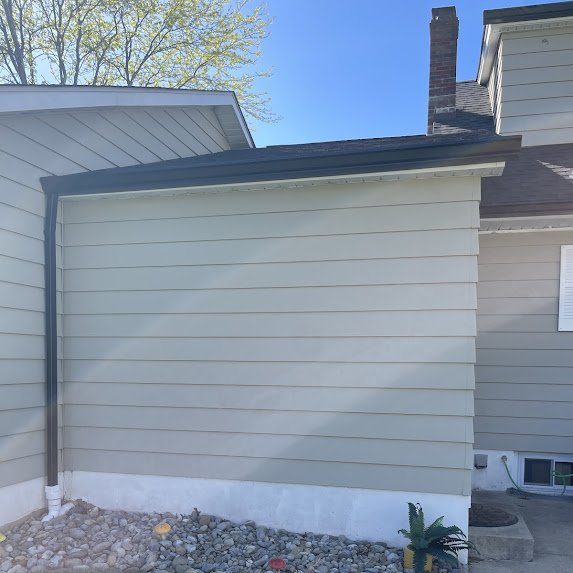
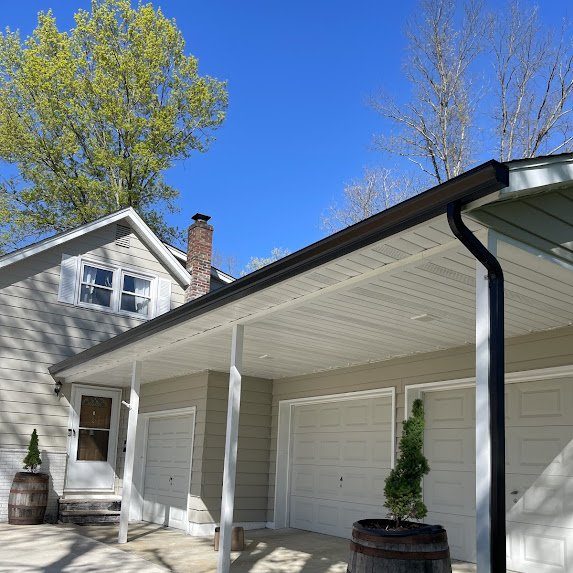
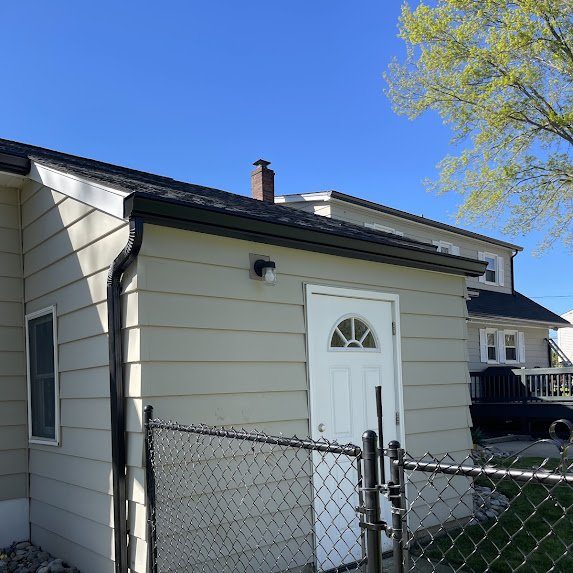
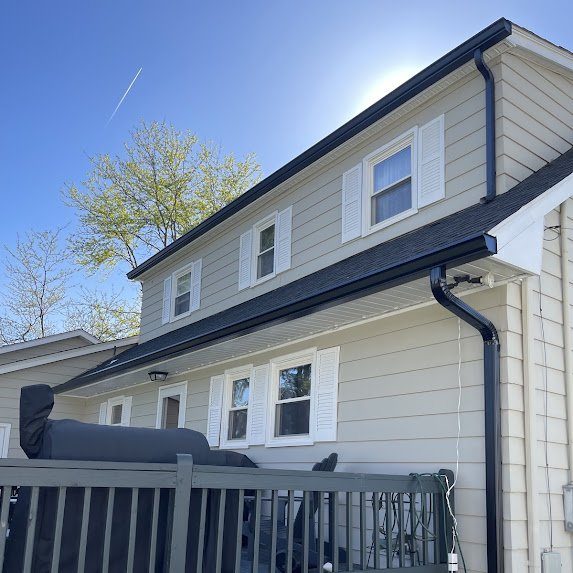
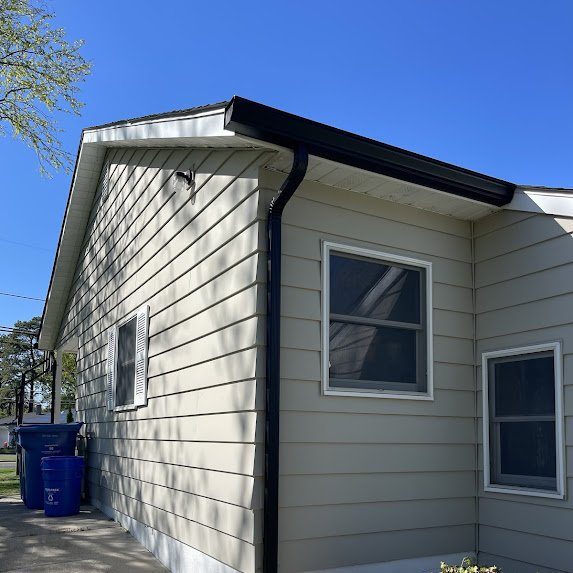
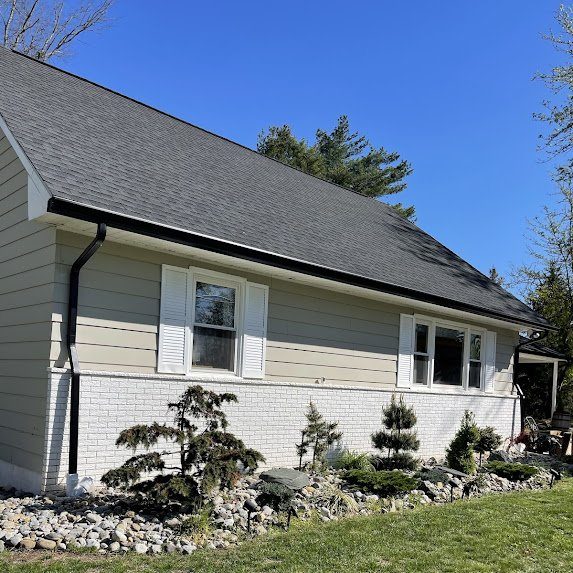
- Spotswood home upgraded to 6-inch black K-style seamless gutters with hidden hangers.
- The bigger trough buys real capacity for heavy rain while the black sharpens the whole roofline.
- Upgrading size at replacement time costs little extra and future-proofs the system.
The Job
The homeowner reached out because their existing gutter system had reached the end of its useful life. Sections were sagging, joints were leaking, and during heavy rain water was pouring over the edges instead of flowing through the downspouts. They wanted something better than another patch job, they wanted an upgrade.
We pulled the old system completely. Old gutters, old hangers, old downspouts, all of it. Once the fascia was clear and prepped, we got to work.
What We Installed
Brand-new 6-inch K-style seamless aluminum gutters in black, custom roll-formed on-site to match the home's exact roofline. No factory seams. No weak joints. Just one continuous run on each roof section.
Every section is held in place with hidden hanger screws spaced for maximum hold strength. Hidden hangers fasten through the gutter into the fascia from the inside, so there's no visible hardware on the front face, cleaner look, stronger grip.
The black finish is what really pulls this house together. Against the warm beige siding it adds definition along the roofline that the older white system was missing entirely. The home reads sharper, more modern, more deliberate from the curb.
Why 6-Inch Was the Right Move
Most New Jersey homes ship from the builder with 5-inch gutters. They work fine for average rainfall on average rooflines. But on homes with steeper pitches, larger roof surface area, or in areas that get the kind of intense downpour bursts NJ summers love to throw at us, 5-inch systems start overflowing.
6-inch gutters carry roughly 40% more water and pair with 3x4 downspouts that move significantly more volume than the standard 2x3. For a home like this one, the upgrade in capacity is what separates a system that handles heavy storms quietly from one you have to monitor every time clouds roll in.
Want the full breakdown on sizing? We covered it in 5-Inch vs 6-Inch Gutters: Which Do You Need?
Project Gallery
About Spotswood
Spotswood is a small Middlesex County borough, about 8,500 residents tucked between Monroe Township to the south, Old Bridge to the east, and East Brunswick to the north. The borough's housing stock skews toward mid-century single-family homes with mature tree canopy, which means leaf load on gutters is a real factor here, especially in fall.
We work all over Middlesex and the surrounding Monmouth County, so if you're nearby and your gutters are showing their age, give us a shout.